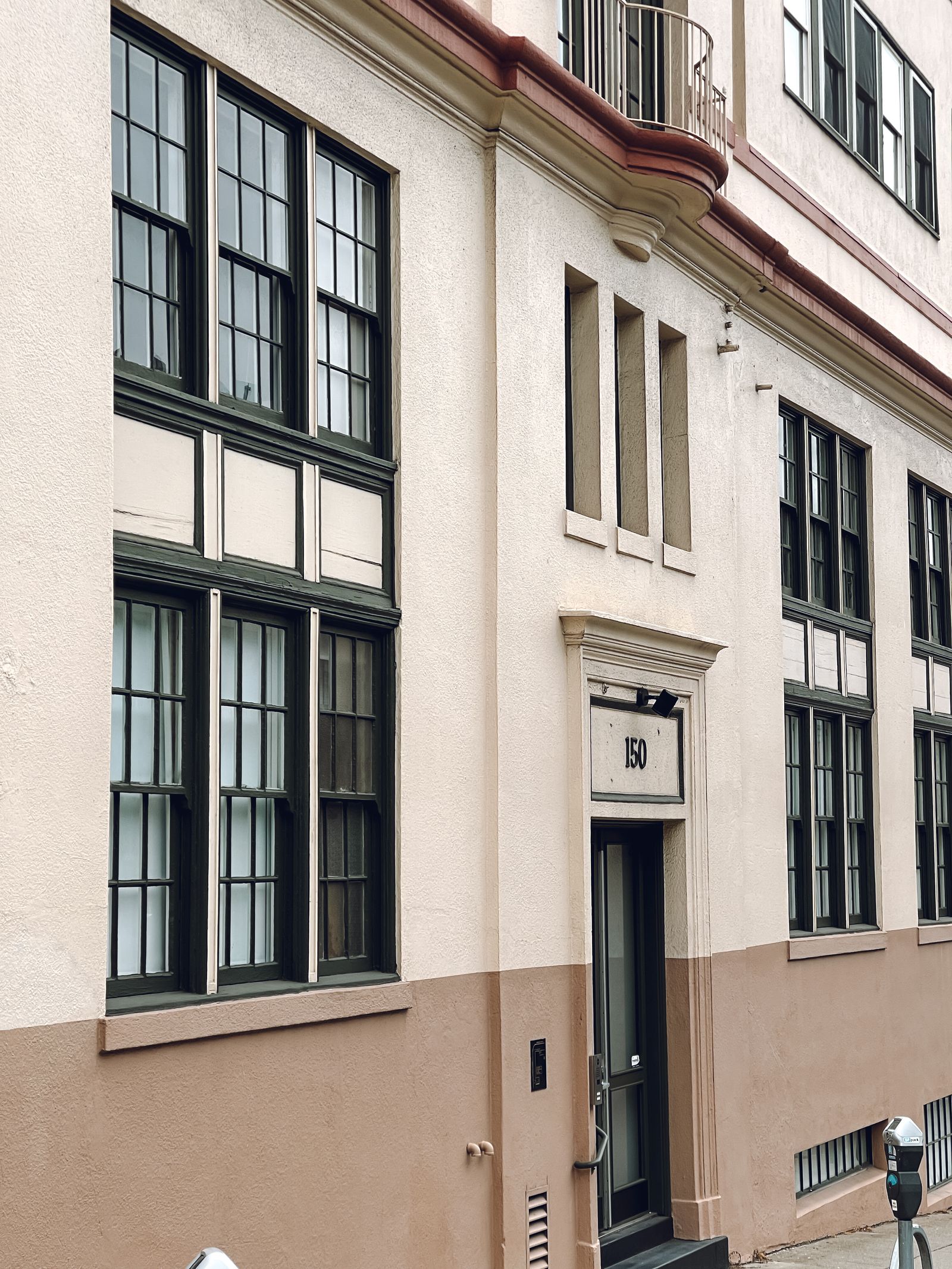
Start with the Frederick facade and the result you need
Frederick commercial properties often combine several generations of construction. Downtown blocks may place historic brick and mortar beside stone trim, storefront glass, painted wood, newer windows, metal signs, awnings, and repaired masonry. A medical or office building may use precast, EIFS, concrete, glass, and coated metal around a busy entrance. Golden Mile and Westview retail properties may add canopies, monument signs, drive-through lanes, loading areas, and landscaped islands. Industrial and warehouse sites along I-70, I-270, East Street, or the Monocacy corridor may have broad metal and concrete walls with active docks and vehicle traffic. The scope should separate those zones before selecting chemistry, dwell time, pressure, rinse volume, or access equipment.
A compatible soft-washing process may help with organic growth, pollen, bird residue, mildew-like staining, and atmospheric film when the solution, dwell, rinse, and protection fit the surface. It is not a substitute for masonry repair, leak investigation, coating replacement, glass polishing, rust treatment, or correction of a failed gutter or joint. A dark mark can be organic, mineral, oxidized, soot-based, salt-related, or caused by recurring water movement. A representative test area and dry inspection help set an honest expectation, especially on porous historic masonry, aged coatings, or previously repaired elevations.
- Separate historic brick, mortar, stone, concrete, glass, metal, stucco, EIFS, and painted areas.
- Identify organic film, pollen, traffic soil, minerals, oxidation, salts, and drainage streaks.
- Define whether the goal is a visible entry refresh, recurring maintenance, or priority-elevation cleaning.
- Keep repairs, restoration, coating removal, and hard-water polishing outside a routine wash scope.
Plan around Downtown Frederick, Golden Mile, and Westview operations
Downtown Frederick can put washing close to pedestrians, restaurants, outdoor seating, events, deliveries, curb parking, galleries, apartments, and narrow sidewalks. A property contact should identify the primary public entrance, accessible route, tenant hours, event calendar, delivery window, and the person authorized to pause work. Work may be phased by elevation or frontage so one entrance remains available while another is controlled. Historic context matters for material protection and coordination, but it does not imply a historic approval, city contract, or endorsement; the actual property requirements must be confirmed by the owner or manager.
Golden Mile properties around West Patrick Street and nearby retail corridors may need coordination around shared parking, customer traffic, monument signs, drive-through lanes, dumpsters, delivery vehicles, and multiple tenants. Westview-area retail and office sites can have broad facades but limited staging between storefronts, landscaped beds, and active drives. A medical office or clinic near US 15, I-70, or the Frederick Health corridor needs clear patient drop-off, accessible paths, air-intake review, and quiet timing. Warehouses and industrial buildings near I-70, I-270, East Street, and the Monocacy area may need dock, trailer, forklift, gate, shift-change, and security coordination. A practical quote accounts for how the site is used, not only how many square feet it contains.
Expect humid summers, storms, salt, and freeze-thaw effects
Frederick's humid summer weather, warm shaded walls, tree cover, pollen, and thunderstorms can leave some elevations damp longer than others. A north-facing brick wall beside landscaping may resoil differently from a sunny metal panel along a parking lot. Heavy rain can move soil beneath a roof edge, expose a downspout problem, or leave fresh splash on lower walls. After winter, deicing salt and brine can collect at entrances, curbs, loading areas, and parking-side masonry. Freeze-thaw cycles can widen existing cracks, loosen coatings, and make damaged mortar or concrete more vulnerable to aggressive cleaning. These conditions should be documented rather than treated as a reason to increase force automatically.
Scheduling should consider temperature, wind, lightning, rain probability, surface moisture, drying time, and public activity. Direct sun can shorten dwell time on one elevation while shade slows drying on another. Gusts affect mist control, landscaping, pedestrians, vehicles, and any aerial operation. A storm may dilute an application or change the flow path. The quote should state pause and reschedule triggers and distinguish removable soil from efflorescence, oxidation, salt residue, soot, or a building-envelope problem. If staining returns below a gutter, parapet, irrigation head, or failed joint, cleaning can document the condition but should not be presented as a repair.
- Inspect shaded walls, roof edges, gutters, downspouts, planting beds, and recurring wet areas.
- Account for summer humidity, thunderstorms, winter salt, icy surfaces, and freeze-thaw damage.
- Schedule around wind, lightning, rain, surface moisture, drying time, and customer activity.
- Agree on weather pauses before hoses, barriers, chemistry, or aerial equipment are deployed.
Make access and runoff part of the Frederick work plan
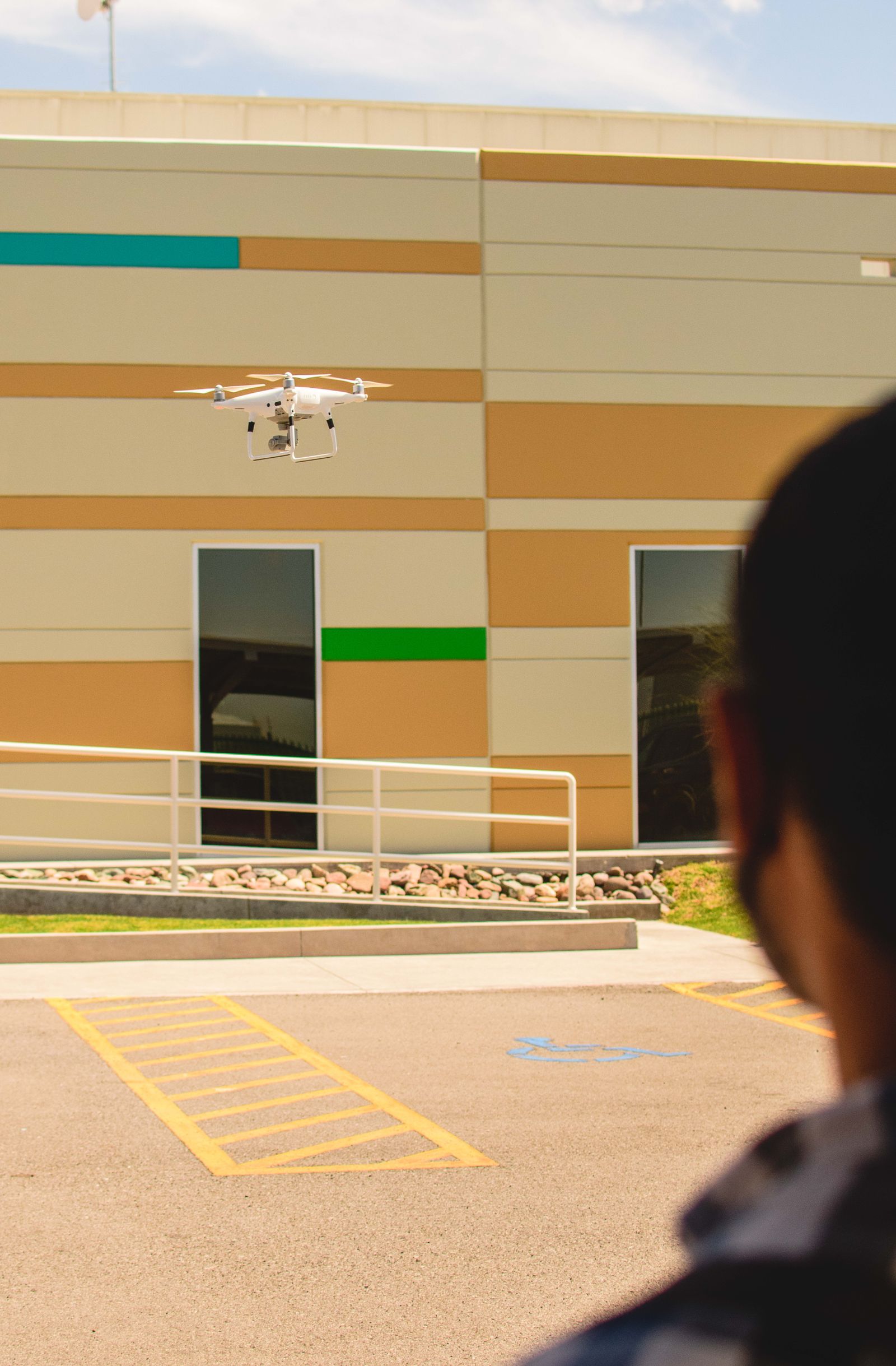
Drone-assisted application or rinsing may be considered for suitable broad upper elevations when there is enough setback, launch and recovery space, visual control, workable wind, public separation, and a coordinated ground team. It can reduce some repositioning on selected parapets, ledges, sign bands, or tall walls. It does not replace testing, hand detailing, contact-clean glass work, close condition assessment, or repair. Downtown wires and adjacent buildings, retail signs and trees, medical rooftop equipment, and industrial traffic can make a pole, lift, ground, or hybrid plan more appropriate. Commercial drone work remains subject to applicable Federal Aviation Administration requirements.
Before work begins, map doors, accessible paths, parking aisles, loading lanes, air intakes, landscaping, vehicles, cameras, electrical equipment, low points, and storm drains. Frederick sites can move rinse water across sloped lots, curbs, alleys, swales, garages, and industrial yards faster than expected. A drain is not automatic permission for treated water or concentrated residue to enter it. Depending on the product, soil, rinse volume, slope, and receiving system, controls may include diversion, collection, recovery, reduced rinse volume, filtration, plant protection, disposal, or coordination with the responsible authority. The proposal should state assumptions and what happens if observed flow differs from the site review.
A closeout record should identify completed elevations, remaining deposits, visible damage, access limitations, and conditions that need another trade. For an occupied site, the record is also useful for ownership, facilities, tenant, and maintenance decisions. The customer should know who can stop work when a patient, customer, employee, truck, gust, storm, or unexpected flow enters the controlled area.
- Confirm water access, hose routes, barriers, spotters, emergency paths, and stop-work authority.
- Locate drains, low points, plantings, air intakes, vehicles, loading areas, and public routes.
- State runoff assumptions and controls before water is applied, especially at industrial sites.
- Document cleaned zones, remaining stains, and repair or restoration referrals at closeout.
Request a Frederick quote with useful property details
Send the property address, building use, approximate height, facade materials, priority elevations, photos, preferred timing, operating hours, water access, nearby drains, and any known leaks, loose masonry, coating failures, salt exposure, or previous cleaning damage. Include Downtown event or delivery constraints, Golden Mile tenant hours, Westview customer traffic, medical drop-off needs, or industrial dock and shift requirements. Ask the proposal to identify methods by zone, test-area expectations, access equipment, protection, weather limits, runoff assumptions, included elevations, exclusions, and the conditions that belong to a mason, roofer, painter, glazier, or envelope professional.
Drone Building Cleaners can help Frederick property managers, owners, facilities teams, retailers, clinics, offices, hotels, mixed-use buildings, warehouses, and industrial operators discuss the practical next step. Call +1 239-351-2897 or email contact@dronebuildingcleaners.com to get in touch and request a quote. The conversation should focus on the building's condition, access, schedule, water path, and the appearance result you need. An existing quote or contact CTA can begin the review without requiring the customer to choose a cleaning method in advance.