Soft washing is a chemistry-and-material decision
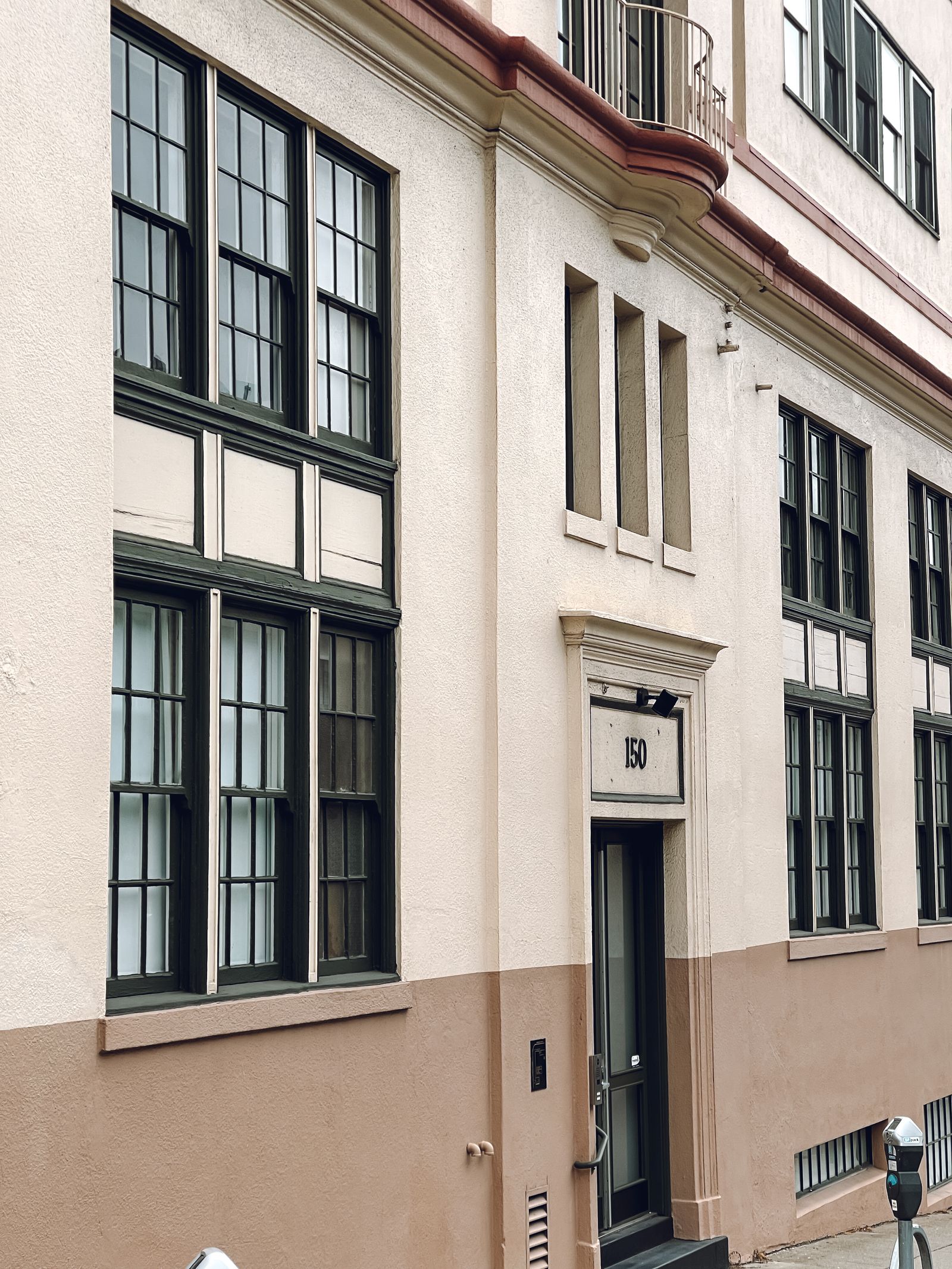
Soft washing generally relies more on a compatible cleaning solution, dwell time, and controlled rinsing than on impact force. It may fit organic growth, pollen, bird residue, and atmospheric film on selected brick, stone, concrete, stucco, EIFS, painted surfaces, and metal after a compatibility review. Lower pressure does not remove all risk: product strength, dwell, temperature, wind, plant exposure, rinse quality, and water entry at failed joints still matter. A test area should be considered when a facade has historic masonry, unknown coatings, prior repairs, or an owner who needs a consistent appearance across multiple elevations.
The same Frederick property may contain historic brick in Downtown, storefront glass and metal trim at a newer addition, precast around a medical entry, and coated panels at a loading area. The method should follow each zone rather than apply one setting from roofline to sidewalk. Soft washing may improve compatible organic film, but it should not be sold as a cure for efflorescence, rust, oxidation, soot, hard-water scale, failed sealant, spalling, cracked concrete, active leaks, or a blocked gutter. A clear proposal says what improvement is expected and what remains outside cleaning.
Pressure washing can fit selected durable surfaces
Controlled pressure may be useful for some durable concrete, sidewalks, curbs, loading areas, parking structures, and other hardscape when the surface condition, nozzle, distance, flow, runoff, and surrounding assets support it. Too much impact can etch concrete, expose aggregate, remove joint material, strip paint, disturb sealants, drive water into openings, or leave visible striping. On historic brick, old mortar, stone, EIFS, stucco, painted trim, and window assemblies, aggressive pressure can create damage that is more expensive than the original soil.
Frederick's winter salt and brine can collect on lower walls, entrances, curbs, and loading lanes. A pressure pass may move residue without addressing a failed downspout, parapet, roof edge, or joint that keeps the area wet. White crust can be mineral or efflorescence; a rust-colored streak can involve oxidation or a metal source; black film can be soot or traffic soil. A method should be chosen after identifying the deposit and the finish required, not because a higher pressure number sounds more powerful or efficient.
- Use pressure only where material, condition, nozzle, distance, flow, and drainage support it.
- Treat historic masonry, coatings, EIFS, stucco, trim, glazing, and sealants as separate risk zones.
- Distinguish organic film from salt, efflorescence, minerals, oxidation, soot, and water movement.
- Refer cracks, failed joints, leaks, corrosion, and coating failure to the appropriate trade.
Compare the methods against Frederick access and operating needs
Method selection should begin with the business outcome. A Downtown restaurant or hotel may need an event-ready entrance without blocking a sidewalk or outdoor seating. A Golden Mile or Westview retailer may need storefronts, canopies, signs, and drive lanes improved before opening or in short phases between tenant peaks. A medical building needs patient drop-off, accessible paths, emergency access, air-intake review, and predictable notices. An I-70 or I-270 office may need a consistent arrival experience while employees continue to work. An industrial or distribution site may prioritize broad wall improvement while docks, trailers, forklifts, gates, and production stay active. Those objectives may call for soft washing, controlled pressure, a lift, a water-fed pole, hand detail, or a hybrid scope.
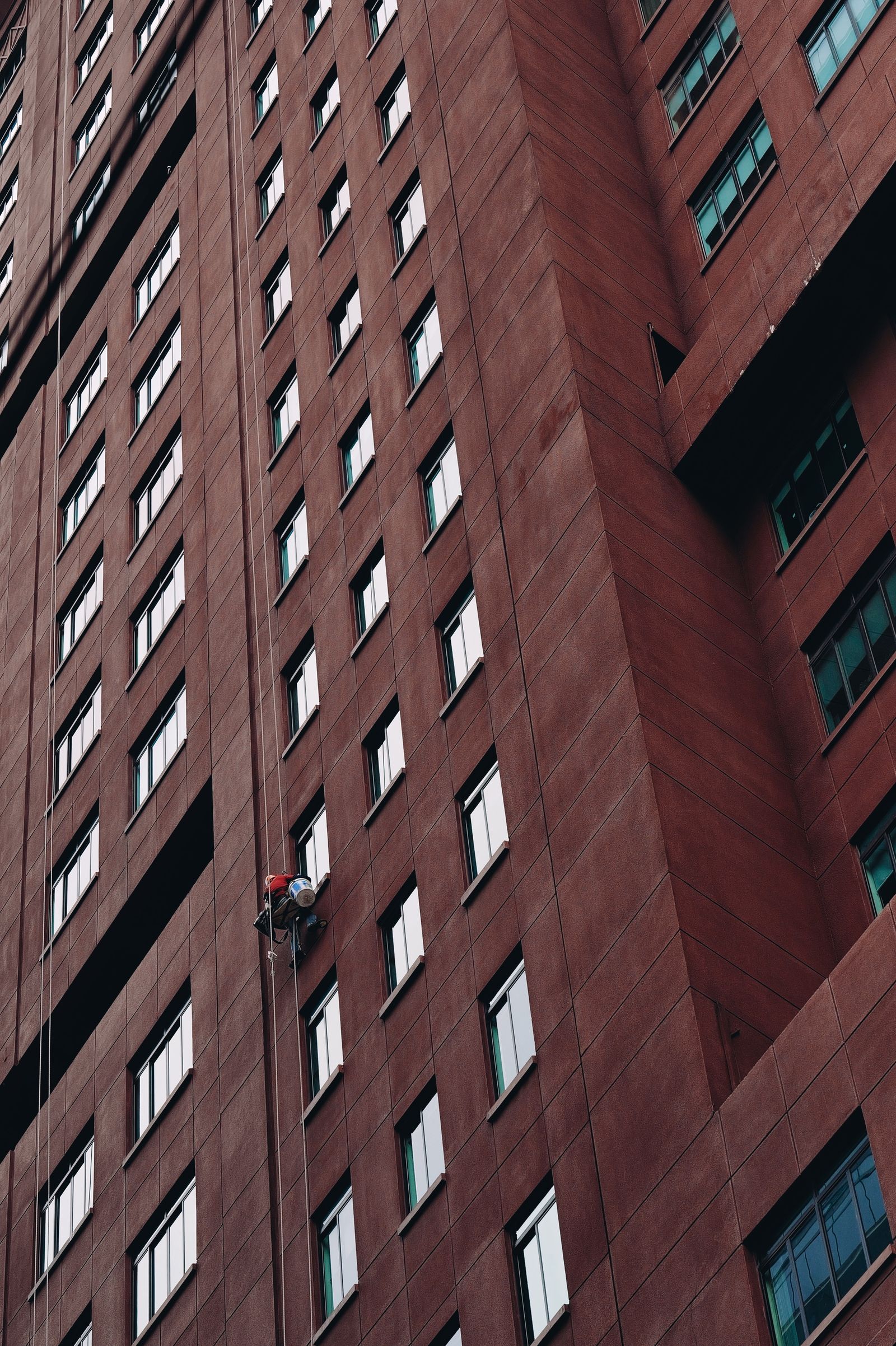
Drone-assisted application or rinsing can support suitable broad upper elevations when setback, wind, visual control, airspace, launch and recovery space, public separation, and ground coordination work together. It may reduce some repositioning, but it does not replace hand detail, test areas, close condition review, contact-clean glass, or runoff controls. Downtown wires, retail signs, mature trees, medical equipment, roadway activity, and industrial obstructions can change feasibility. Commercial operators must follow applicable FAA requirements and any necessary authorization. A quote should identify aerial zones, ground-access zones, and a backup plan if conditions change.
A hybrid method is often the most accurate description. A broad upper wall may receive controlled treatment and rinse, while entry glass, frames, recessed trim, canopies, and bonded deposits need a pole, lift, or person with contact tools. The owner should be able to see which process applies to each elevation and what finish is reasonably expected at closeout.
Treat Maryland weather, winter residue, and runoff as method factors
Humid summers, thunderstorms, spring pollen, shaded walls, autumn leaves, winter salt, and freeze-thaw cycles affect dwell time, drying, footing, visibility, resoiling, and facade condition. Sun can warm a metal panel while a shaded brick wall remains damp. Wind can move mist toward pedestrians, vehicles, landscaping, windows, and neighboring property. Rain can dilute an application and change the rinse path. Freezing conditions or icy pavement can make an otherwise compatible process unsafe. The work window should follow actual conditions rather than a fixed production promise.
Runoff planning belongs in the method comparison. Frederick parking lots, downtown pavement, retail curbs, medical drop-offs, loading yards, swales, garages, and alleys may drain toward storm inlets or lower areas. The product, soil load, rinse volume, slope, receiving system, and applicable Maryland requirements determine the controls. A visible storm drain is not automatic permission for treated water to enter it. Depending on the site, the plan may use diversion, collection, recovery, reduced rinse volume, filtration, plant protection, disposal, or coordination with the responsible authority. If water travels differently than expected, pausing and revising the setup is part of a responsible job.
Use a quote that makes the tradeoffs easy to approve
A comparable Frederick proposal should list each material and service zone, visible soil, proposed method, test-area expectations, access, public controls, protection, water and runoff assumptions, weather limits, included elevations, exclusions, and closeout documentation. Ask whether broad wall washing, entry glass, upper rinsing, canopies, parapets, salt residue, hard-water marks, construction film, and specialty restoration are included or separate. A single phrase such as complete building wash does not tell an owner whether the requested finish is possible.
Send labeled wide and close photos, the address, approximate heights, known repairs, priority elevations, operating hours, water access, nearby drains, event dates, tenant or patient restrictions, delivery schedules, parking rules, security requirements, and the desired result. Ask bidders to map soft washing, pressure, hand work, pole work, lift work, aerial assistance, or specialty referral to the actual zones. To discuss the property, call +1 239-351-2897 or email contact@dronebuildingcleaners.com. Drone Building Cleaners can help turn the comparison into a property-specific quote and an operating plan the facilities team can review.